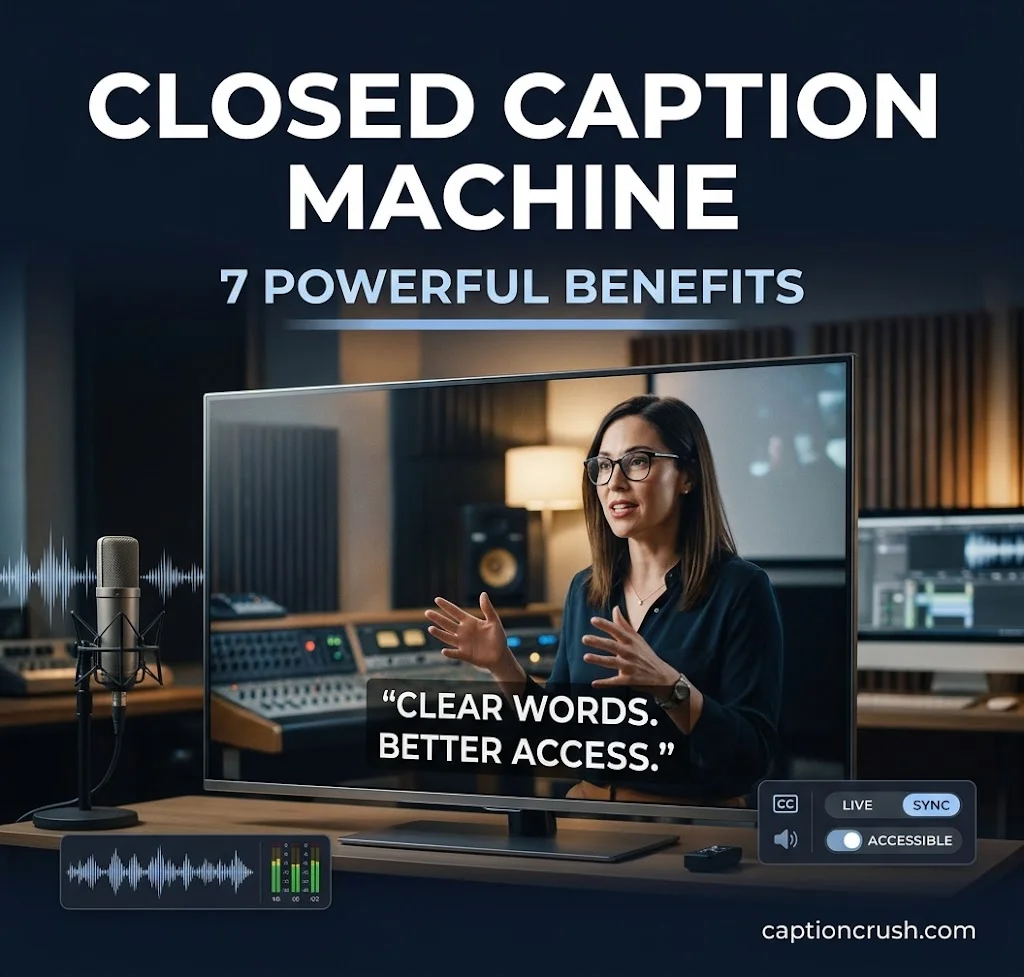
A closed caption machine 7 Powerful & Amazing is a system that turns spoken words into timed text on screen. Viewers can switch it on or off.
About 15% of US adults (37.5 million) report some trouble hearing. Captions help them, and they help many other viewers too. Here is how these machines work, what they do for you, and how to choose one.
Table of Contents
What Is a Closed Caption Machine and How Does It Work?
A closed captioning machine can be hardware, software, or both. The goal is the same: show the right words at the right time.
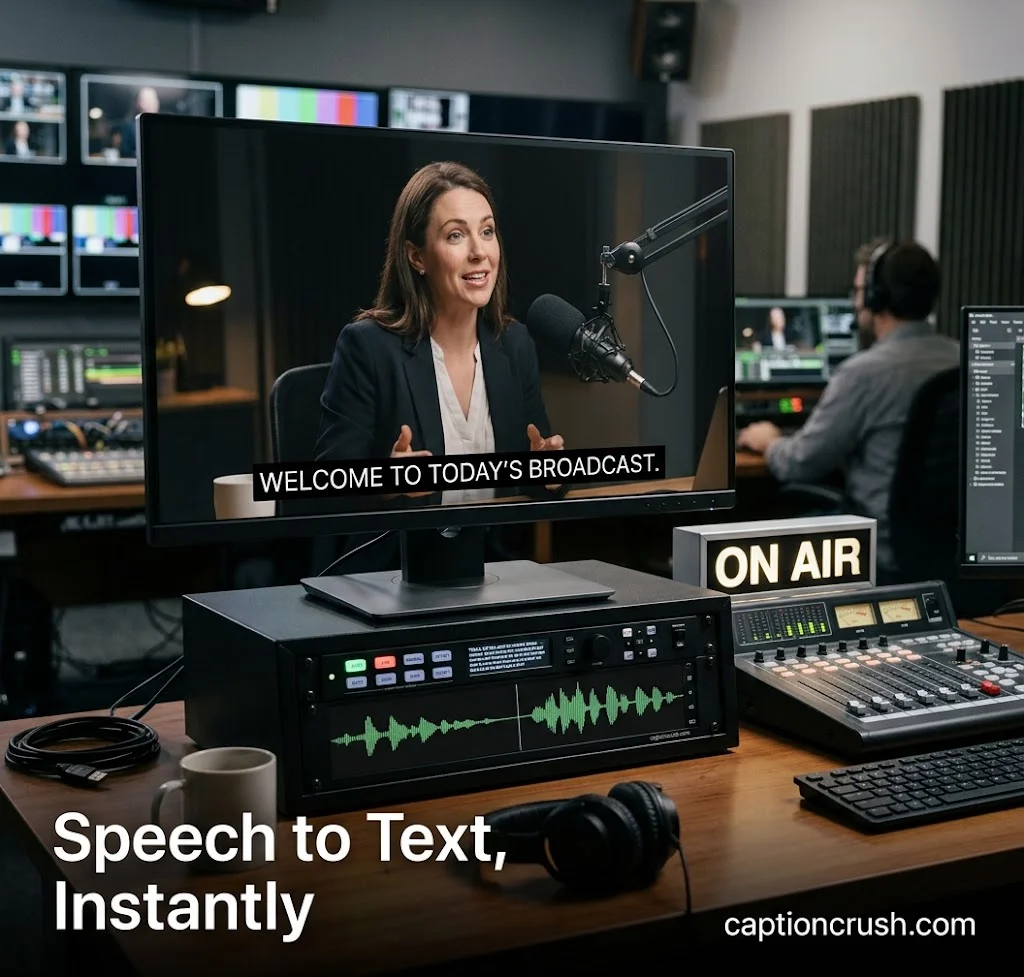
What is a closed caption machine? It is a tool that creates caption data and delivers it with your video. It also adds speaker labels and sound cues like [applause].
How does a closed caption machine work? Most systems follow five steps:
- The machine takes in the audio.
- Speech recognition or a human captioner (CART) turns speech into text.
- The text gets timecodes so it matches the video.
- The captions are embedded in the signal or saved as a sidecar file.
- A TV, player, or app shows them when the viewer turns captions on.
You will meet three main types:
- Hardware caption encoders embed EIA-608/708 data into broadcast signals.
- Automated captioning software, like ENCO enCaption, creates live captions on-site or in the cloud.
- Caption editors, like Closed Caption Creator and Kapwing, prepare captions for recorded video. They export SRT, VTT, SCC, and MCC files.
7 Benefits of a Closed Caption Machine for Clear, Accessible Viewing
A good closed caption machine does more than meet a rule. It makes video easier for almost everyone.
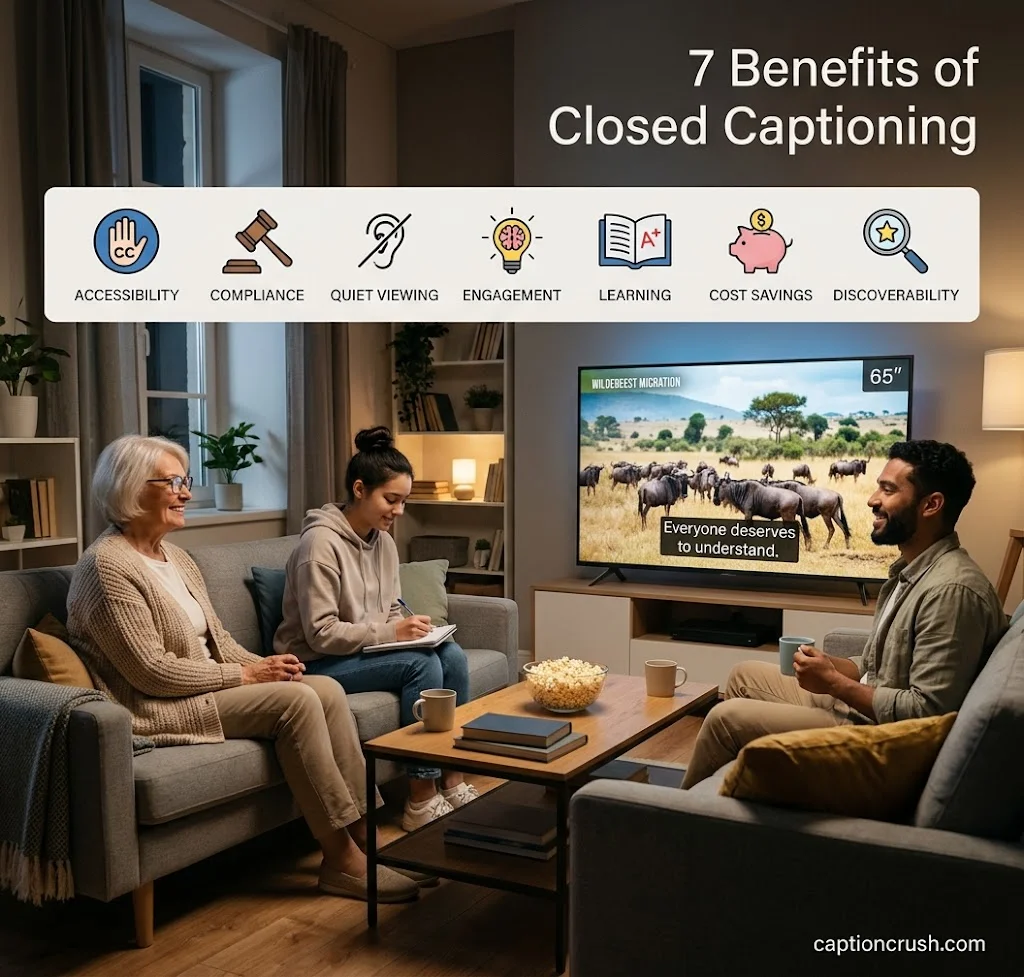
- Real access for deaf and hard-of-hearing viewers. Captions give equal access to news, shows, and alerts. They also explain sounds, which adds context.
- Support for US legal rules. The FCC sets four quality standards for TV captions: accuracy, synchronicity, completeness, and placement.Closed Caption Machine: 7 Powerful & Amazing A machine that runs 24/7 helps you meet them.
- Clear viewing in noisy or quiet places. Gyms, airports, and bedrooms all work better with captions. A Verizon Media and Publicis study found 69% of US viewers watch with sound off in public.
- Longer watch time. In that same study, 80% of viewers said they were more likely to finish a video with captions.
- Better learning. A study of 2,124 students found 98.6% said captions help. Captions also support non-native English speakers.
- Lower captioning costs. ENCO says automated captioning costs far less than traditional services. Tools with batch editing and QC checks also save staff time.
- Stronger SEO and content reuse. Captions create a searchable transcript. A Discovery Digital Networks test found captioned YouTube videos got 13.48% more views in two weeks.
Captions make videos more accessible and engaging, while the right words can make your social media posts equally memorable. If you’re looking for fresh inspiration for your seasonal content, explore these classy summer captions to give your Instagram posts an elegant and stylish touch.
Closed Caption Machine vs Subtitle System: Who Needs One?
The two look alike but do different jobs. Knowing the gap helps you buy the right tool.
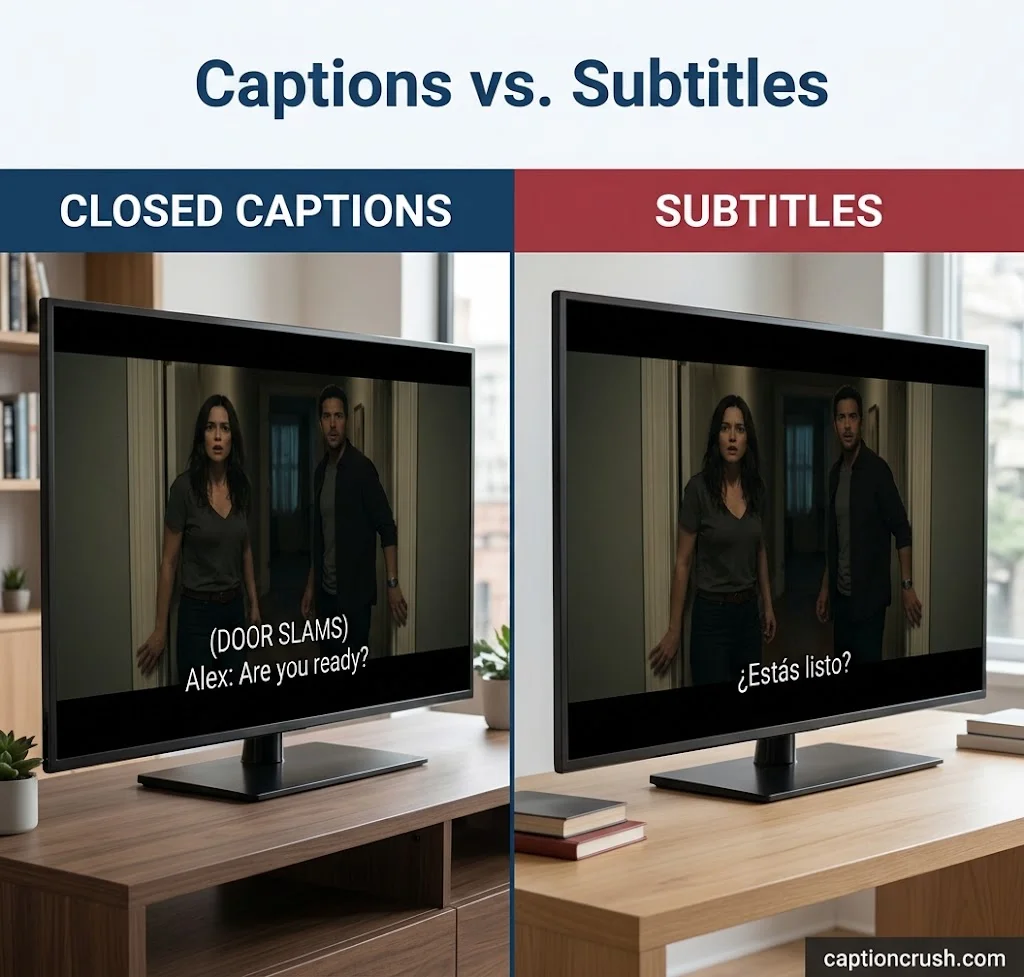
What is the difference between a closed caption machine and a subtitle system? Closed captions serve people who can’t hear the audio. They include sound effects and speaker names. Subtitles serve people who don’t understand the language. They show dialogue only, often translated. As Circle Translations explains, the ADA treats closed captions as an accessibility tool, but not subtitles.
Who needs a closed caption machine?
- TV and radio stations that follow FCC captioning rules.
- City councils and agencies. The DOJ’s ADA Title II web rule requires captions for live and recorded video. Deadlines were pushed to April 26, 2027 for larger entities and April 26, 2028 for smaller ones.
- Schools and universities with lectures and online classes.
- Businesses running webinars, town halls, and training.
- Houses of worship, courts, and venues with live events.
- Creators and marketers posting on YouTube, TikTok, and LinkedIn.
- Movie theaters. Under the 2016 ADA rule, US theaters must offer caption devices, such as Sony Access Glasses and CaptiView stands.
- Home viewers with hearing loss. ClearCaptions offers caption phones, which may be free for eligible users.
How to Choose the Best Closed Caption Machine
The best choice depends on your content, your rules, and your team. Test before you buy.
How do I choose the best closed caption machine? Check these points:
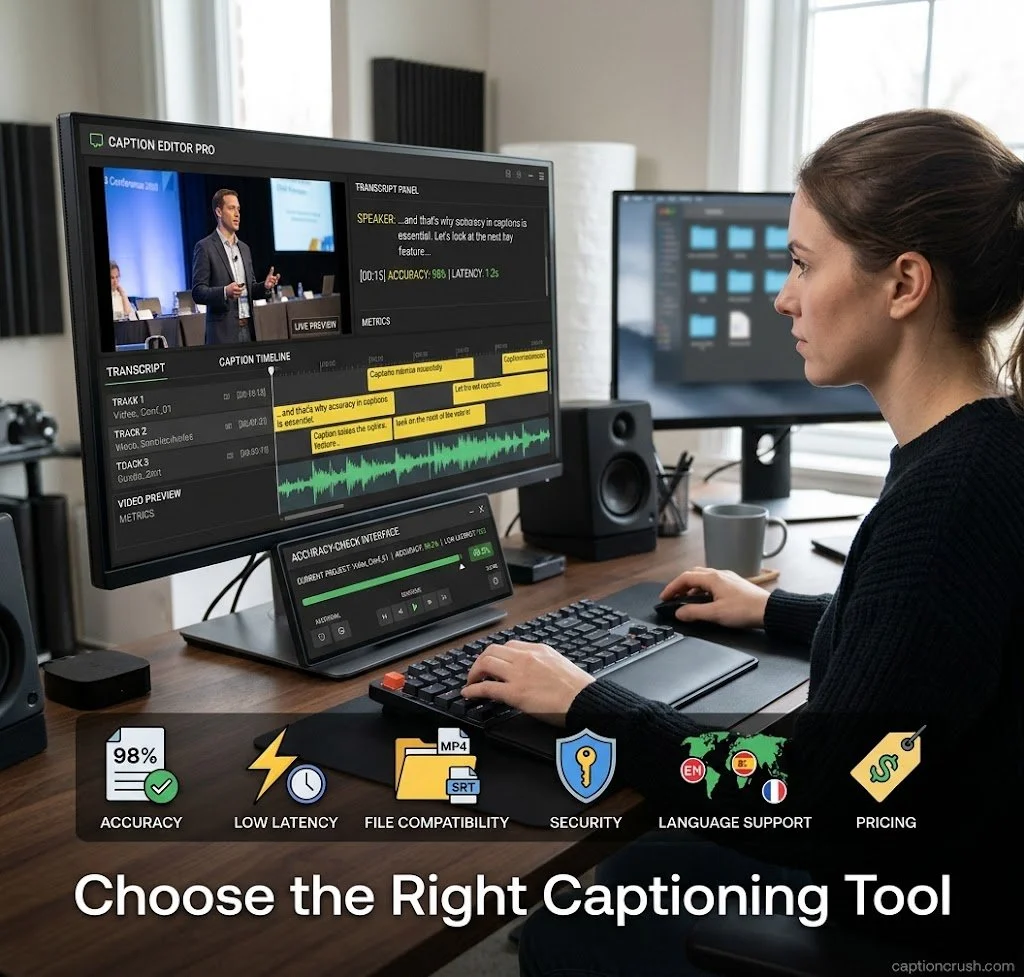
- Live or recorded? enCaption handles live captions. Closed Caption Creator says it is built for file-based work and does not offer live captioning.
- Accuracy. Test with your own voices, accents, and noise. Look for custom word libraries.
- Delay. Live captions should appear within moments of speech. Lag breaks the FCC’s synchronicity standard.
- File formats. Match what your platforms need: SRT, VTT, SCC, MCC, TTML, or embedded 608/708.
- Setup. Pick on-premise, cloud, hybrid, or browser-based. Secure sites often need offline use.
- Integrations. Check NDI, SDI, your media asset manager, or Zoom and Google Meet.
- Languages and speakers. Kapwing translates into 100+ languages. Speaker ID helps in panels.
- Security and support. Look for SOC 2 Type II and real support, ideally 24/7 for live use.
- Total cost. Compare monthly minutes, overage fees, and hardware.
One tip from experience: don’t buy on price alone. A cheap tool that needs heavy fixing costs more in staff hours.
FAQs
What is a closed caption machine?
It is a hardware or software system that turns audio into timed on-screen text. Viewers can turn it on or off.
How does a closed caption machine work?
It converts speech to text, syncs it to the video, and sends it as embedded data or a caption file. A TV or player then displays it.
What is the difference between a closed caption machine and a subtitle system?
Closed captions add sound cues and speaker labels for accessibility. Subtitles mainly show translated dialogue.
Who needs a closed caption machine?
Broadcasters, public agencies, schools, businesses, venues, creators, and people with hearing loss all benefit.
How do I choose the best closed caption machine?
Decide if you need live or recorded captions. Then compare accuracy, delay, formats, security, and cost using a free trial.
Conclusion
A closed caption machine makes video clear for every viewer and supports US accessibility rules. Match the tool to your workflow, test it on real audio, and you will serve your whole audience.

Timmy Abroy is a content creator and the voice behind CaptionCrush, where he shares practical tips on social media captions, creator growth, and content strategy. When he’s not writing, he’s testing what actually gets people to stop scrolling.